مظاهر الضعف اللغوي لدى معلمي التعليم الأساسي وتلاميذهم في بنغازي ، الأسباب وسبل العلاج ( الصفوف الأولى أنموذجا ) دراسة لسانية
DOI:
https://doi.org/10.37376/asj.vi2.100الكلمات المفتاحية:
الضعف اللغوي، المعلمين، التعليم الأساسي، الأسباب، العلاجالملخص
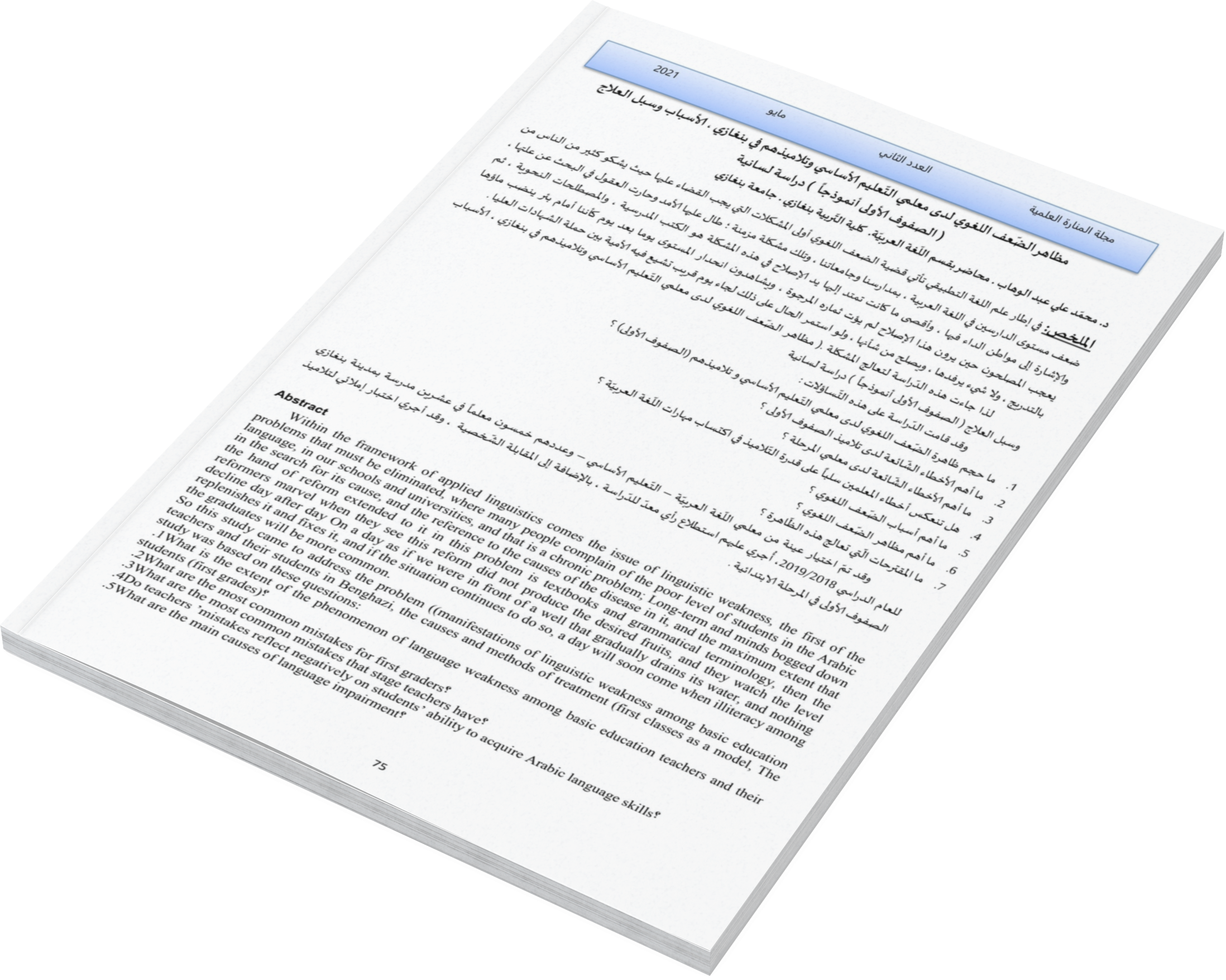
في إطار علم اللغة التطبيقي تأتي قضية الضعف اللغوي أولى المشكلات التي يجب القضاء عليها حيث يشكو كثير من الناس من
ضعف مستوى الدارسين في اللغة العربية ، بمدارسنا وجامعاتنا ، وتلك مشكلة مزمنة : طال عليها الأمد وحارت العقول في البحث عن علتها ،
والإشارة إلى مواطن الداء فيها ، وأقصى ما كانت تمتد إليها يد الإصلاح في هذه المشكلة هو الكتب المدرسية ، والمصطلحات النحوية ، ثم
يعجب المصلحون حين يرون هذا الإصلاح لم يؤت ثماره المرجوة ، ويشاهدون انحدار المستوى يوما بعد يوم كأننا أمام بئر ينضب ماؤها
بالتدريج ، ولا شيء يرفدها ، ويصلح من شأنها ، ولو استمر الحال على ذلك لجاء يوم قریب تشيع فيه الأمية بين حملة الشهادات العليا .
لذا جاءت هذه الدراسة لتعالج المشكلة .( مظاهر الضعف اللغوي لدى معلمي التعليم الأساسي وتلاميذهم في بنغازي ، الأسباب
وسبل العلاج ( الصفوف الأولى أنموذجا ) دراسة لسانية
وقد قامت الدراسة على هذه التساؤلات :
ما حجم ظاهرة الضعف اللغوي لدى معلمي التعليم الأساسي و تلاميذهم (الصفوف الأولى) ؟
2. ما أهم الأخطاء الشائعة لدى تلاميذ الصفوف الأولى ؟
3. ما أهم الأخطاء الشائعة لدى معلمي المرحلة ؟
4. هل تنعكس أخطاء المعلمين سلبا على قدرة التلاميذ في اكتساب مهارات اللغة العربية ؟
5. ما أهم أسباب الضعف اللغوي ؟
6. ما أهم مظاهر الضعف اللغوي ؟
7. ما المقترحات التي تعالج هذه الظاهرة ؟
وقد تم اختيار عينة من معلمي اللغة العربية - التعليم الأساسي - وعددهم خمسون معلمة في عشرين مدرسة بمدينة بنغازي
للعام الدراسي 2019/2018، أجري عليهم استطلاع رأي معد للدراسة ، بالإضافة إلى المقابلة الشخصية ، وقد أجري اختبار إملائي لتلاميذ
الصفوف الأولى في المرحلة الابتدائية .
التنزيلات
التنزيلات
منشور
كيفية الاقتباس
إصدار
القسم
الرخصة
الحقوق الفكرية (c) 2021 مجلة المنارة العلمية

هذا العمل مرخص بموجب Creative Commons Attribution-NonCommercial-NoDerivatives 4.0 International License.
يُعرّف الترخيص التالي (رخصة المشاع الإبداعي) إعادة استخدام المقالات المنشورة في مجلة المنارة العلمية من قِبل جهات خارجية:
Creative Commons Attribution-NonCommercial-NoDerivatives 4.0 license (CC BY-NC-ND 4.0):
تتيح الرخصة للمستخدمين تنزيل النصوص الكاملة للمقالات المخزنة في أرشيف المنشورات، أو نسخها، أو توزيعها، أو طباعتها، أو البحث فيها، أو ربطها، شريطة أن يكون ذلك لأغراض غير تجارية. لا يُسمح بتوزيع المقالة إذا تم تغييرها أو تحريرها بأي شكل من الأشكال. إعادة إستخدام المقالة يتطلب ذكر المرجع الأصلي مع إرفاق الرابط الخاص بها (مثل رابط DOI). التفاصيل الكاملة للترخيص متاحة على الرابط https://creativecommons.org/licenses/by-nc-nd/4.0